
PIVOT
Overview
This course-based UX research project examined the travel booking habits and decision-making processes of young adults to help convert Airbnb website visitors under 35 into paying customers.
Using a mixed-methods approach, our team identified usability barriers and decision-making factors that affect booking behavior on Airbnb’s desktop site, yielding in actionable recommendations aimed at increasing engagement for young adult users.
Role
UX Researcher
Project Manager
Team
Alesandra, UXR
Ryan, UXR
Timeline
Aug 2023 - Dec 2023
Methods
Contextual Inquiry
Interviews
Survey
Usability Tests
Tools
Qualtrics
Miro
Figma
Google Suite
Context
Airbnb is a leader in the travel industry with a strong pulse on evolving consumer trends.
As purchasing preferences shift from material goods towards travel experiences, young adults under 35 have emerged as Airbnb’s most behavior-driven growth demographic.
Since young adults are digital natives who are almost constantly online, their planning habits are distinct, affecting which websites they use to plan their travels.
Problem Space
For this course-based project, our team focused on the 'browser-to-buyer' journey for young adults on Airbnb’s desktop platform.
Based on our own experiences as young adults, we observed that conversion rate from browsing to booking tends to be low. While many young adults visit travel websites to explore lodging options, they book far less often than they browse.
Problem Statement
How might we redesign Airbnb’s desktop experience to increase booking conversion and cultivate long-term loyalty among young adult travelers?
Methodology
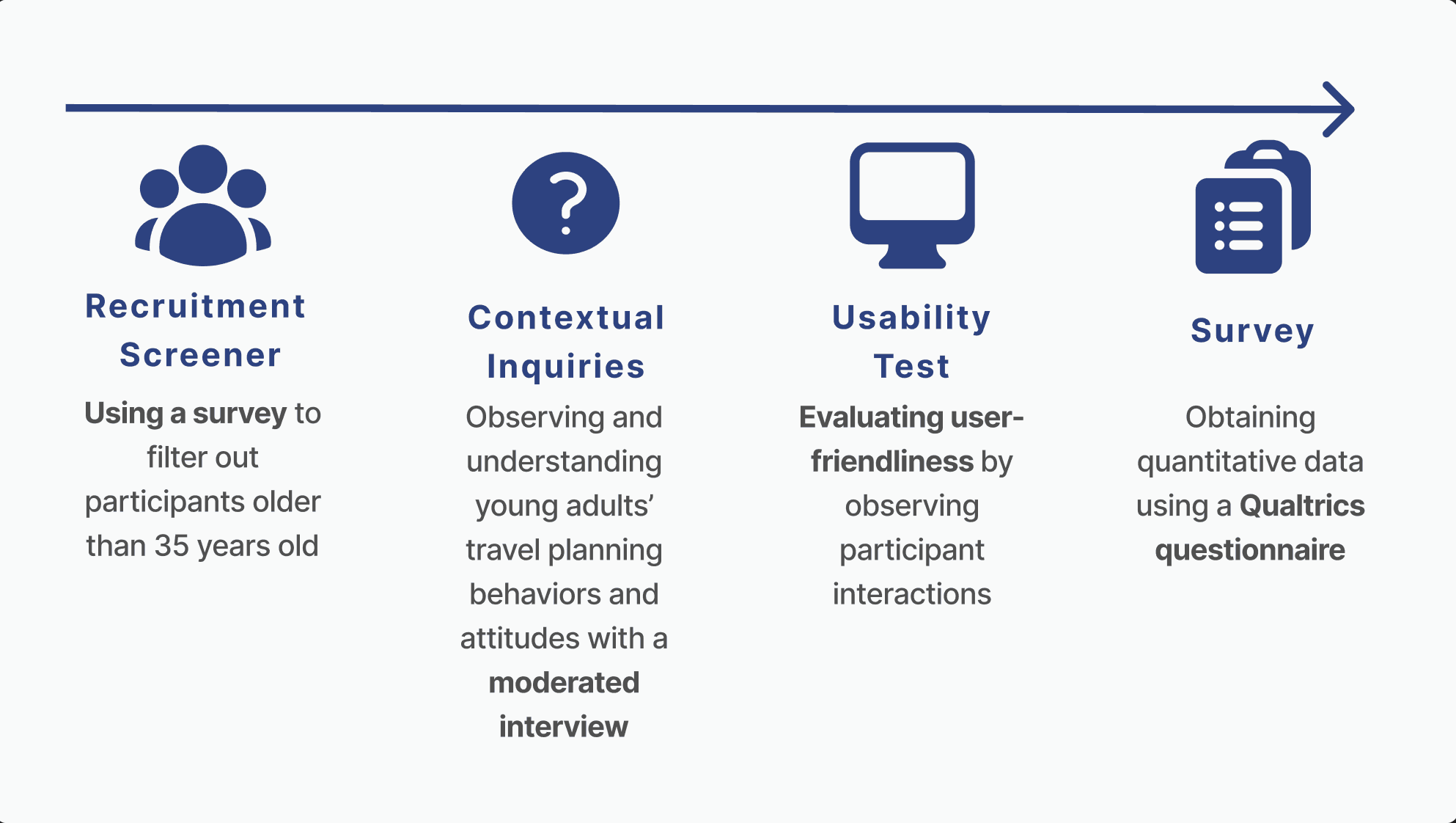
Our team conducted recruitment screeners, contextual inquiries, interviews, usability testing, surveys, affinity mapping, and data analysis—in that order—to generate actionable insights.
By sequencing our methods this way, we were able to intentionally build findings on top of one another, allowing each phase to inform and strengthen the next.
Recruitment Screener
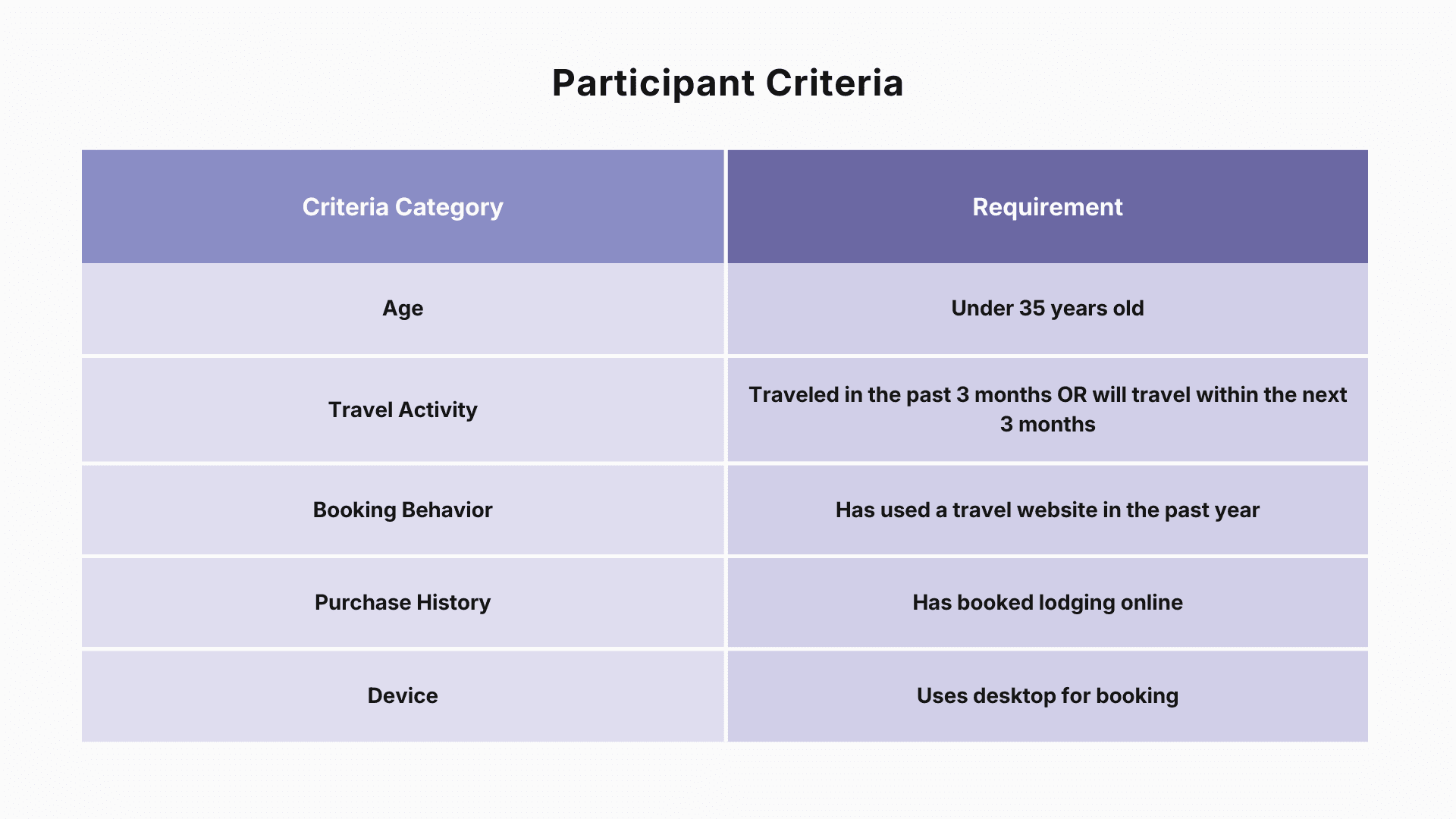
To target our key demographic, we selected participants under 35 years old who either traveled recently or planned to travel within the next three months.
Contextual Inquiries
Our team wanted to observe and understand participants’ travel booking behavior and attitudes in their natural environment.
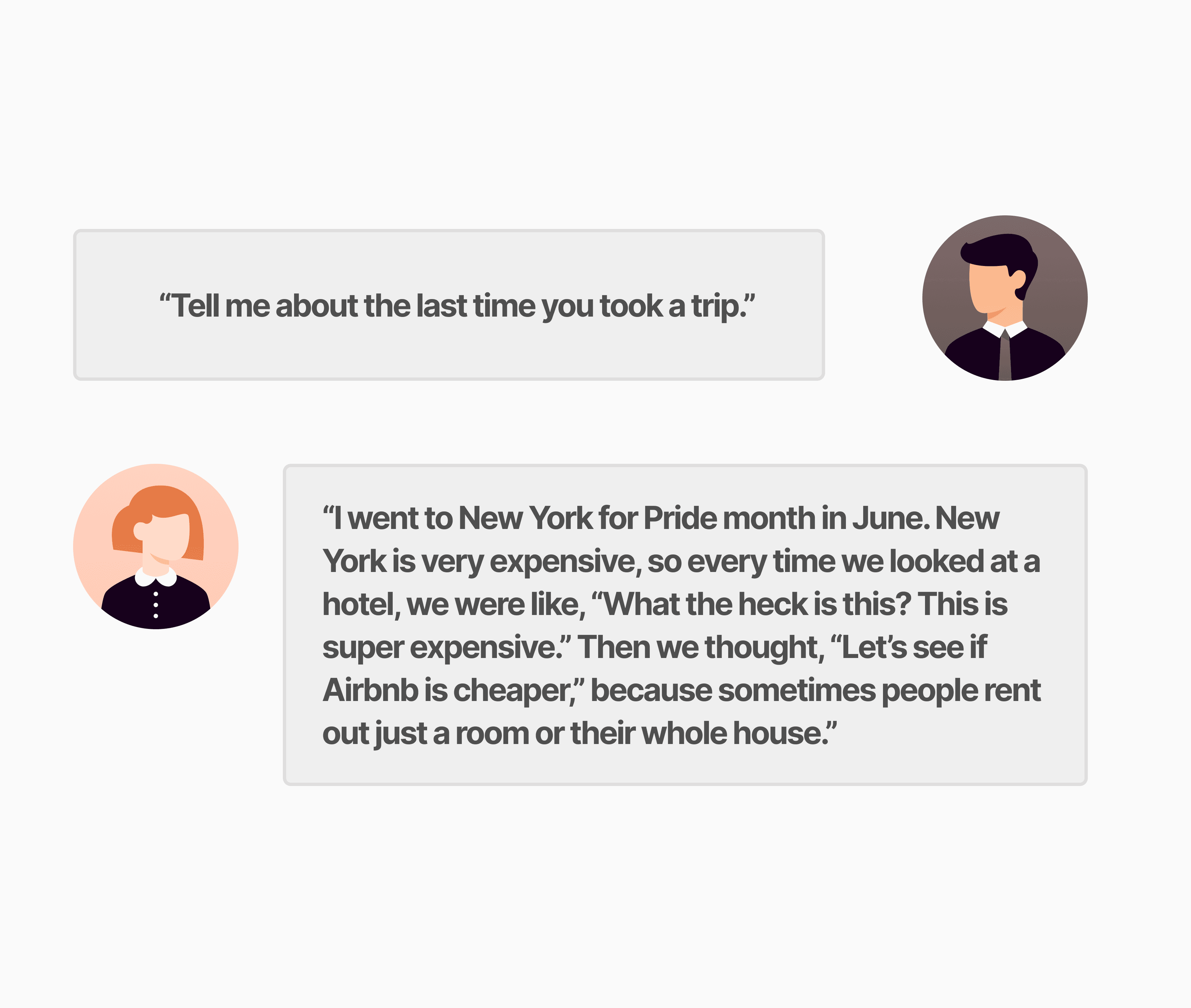
Utilizing the interview guides I created, our team conducted semi-structured interviews to understand the participants’ travel booking behavior and attitudes in their own words.
Afterwards, we observed the participants’ workflows and actions when given the task of looking for an accommodation, asking probing questions at key moments to see their behaviors in their natural environment.

Sketch of a participant's workspace
Usability Testing
After examining how participants book lodging in their natural environment, our team needed to evaluate the usability of Airbnb's desktop site to uncover pain points or friction.
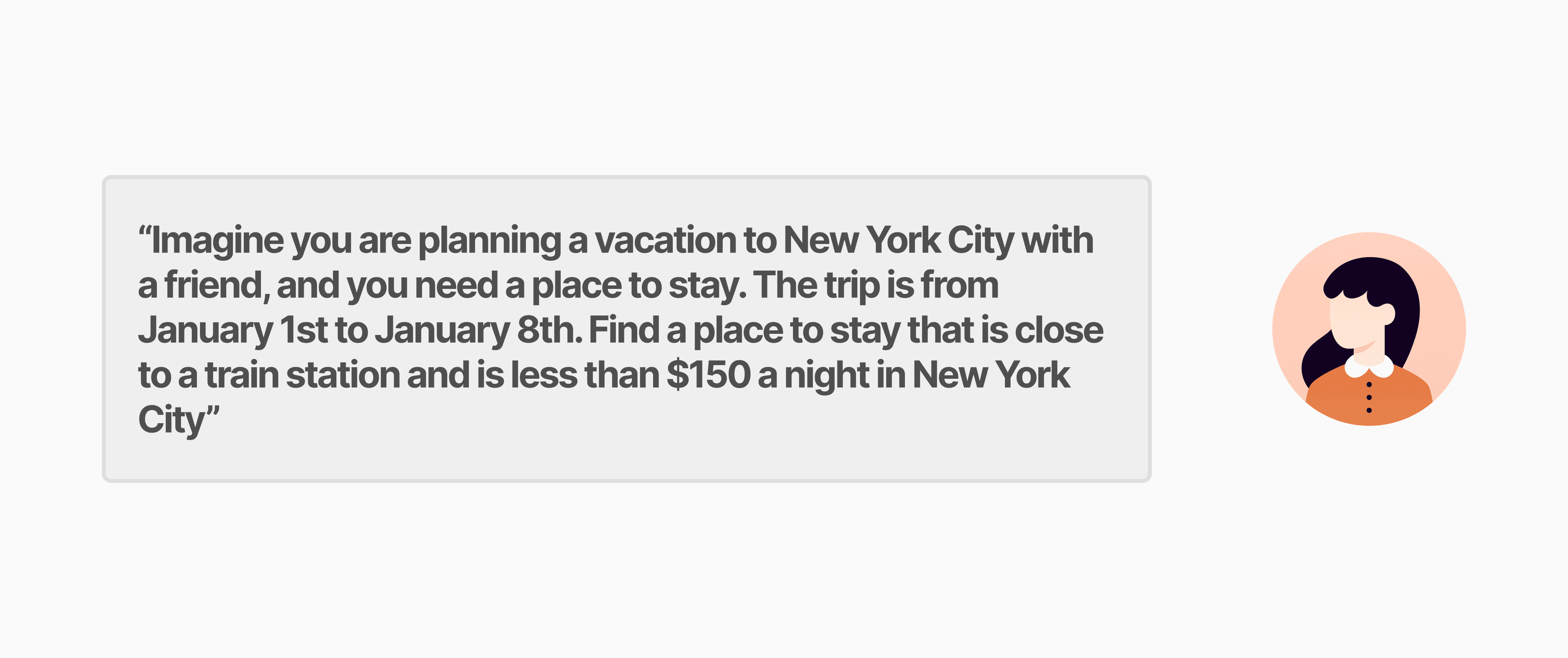
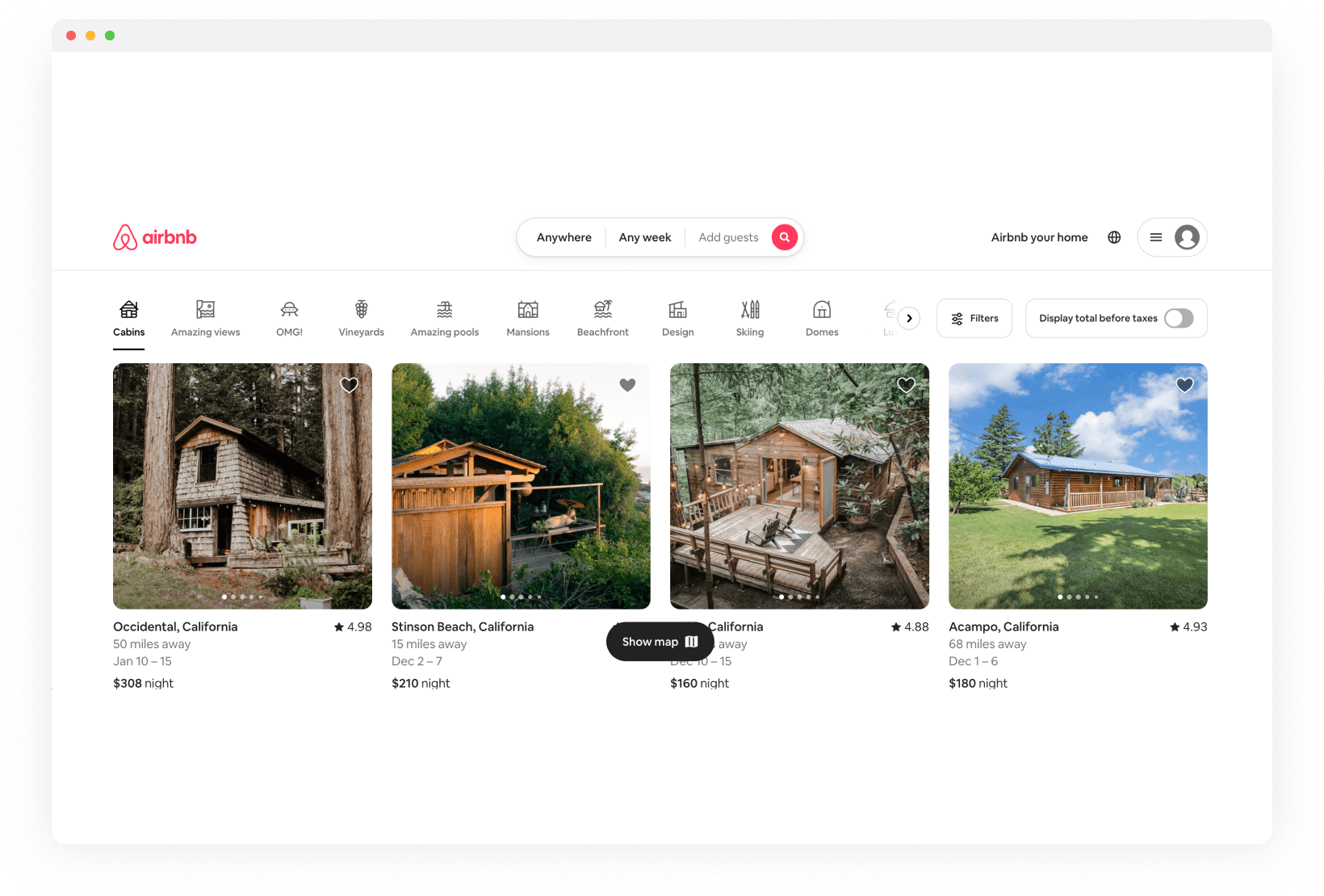
I led the development of our usability testing protocol, crafting tasks to better understand how young travelers navigate and interact with the platform in regards to lodging booking journey.
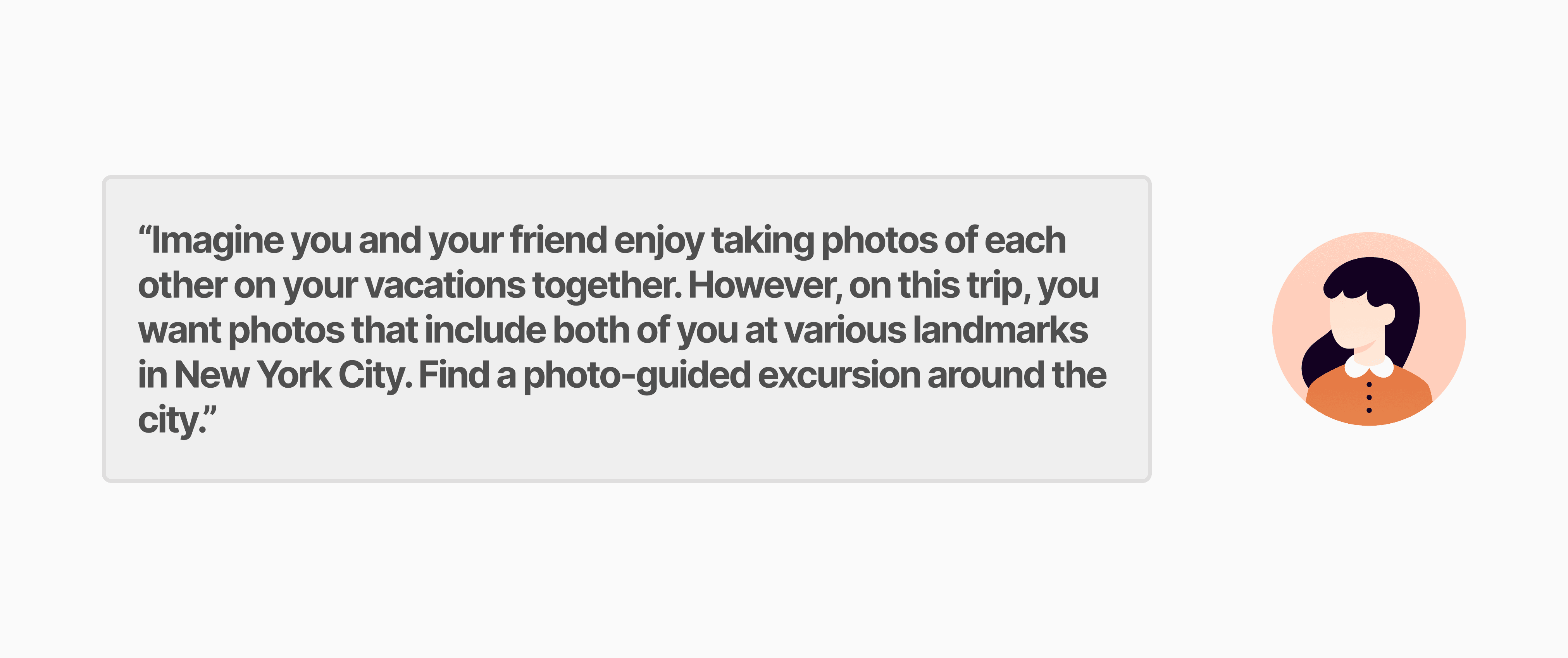
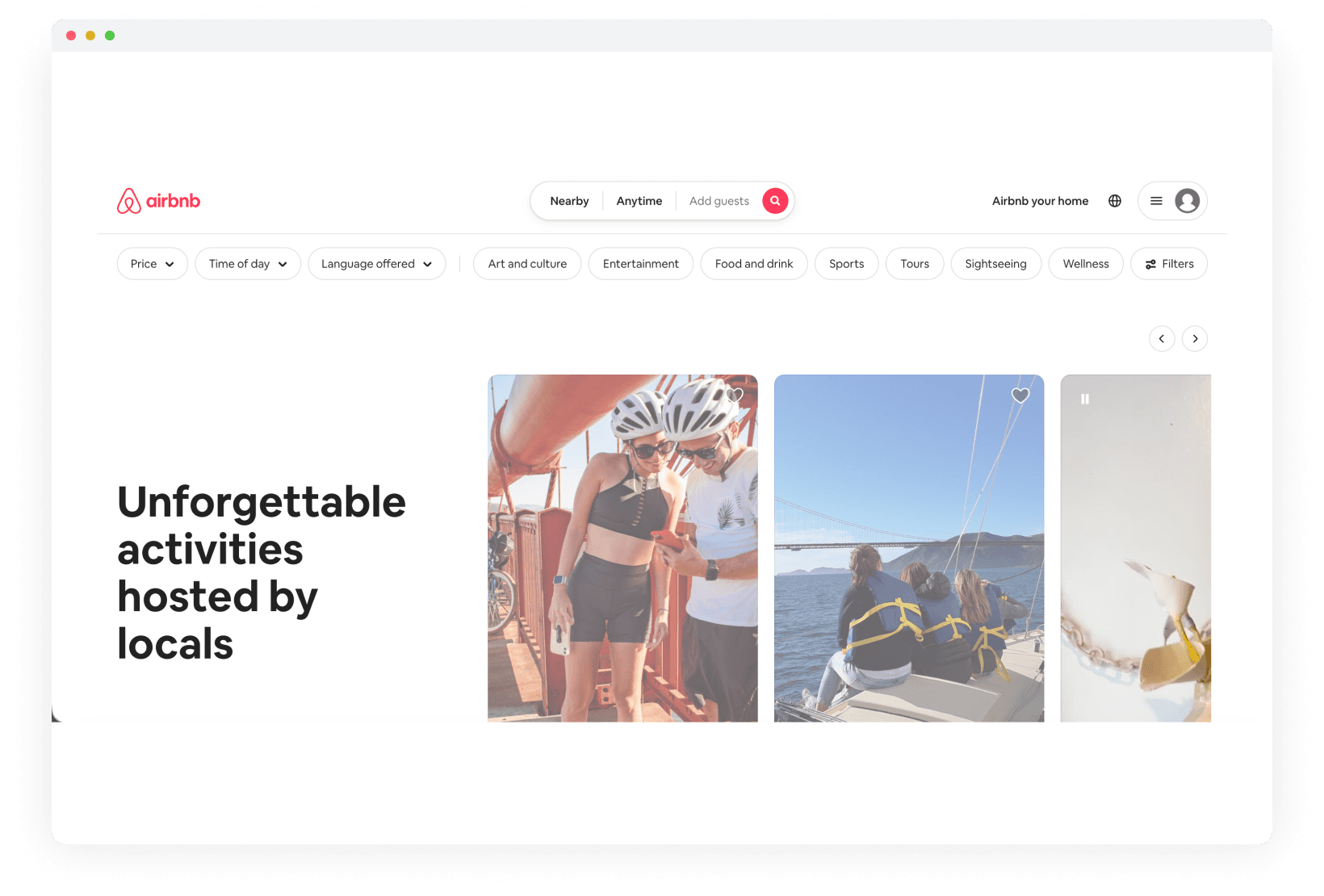
Additionally, we asked questions about the Experiences page to investigate how familiar users were with all of the platform's features.
Surveys
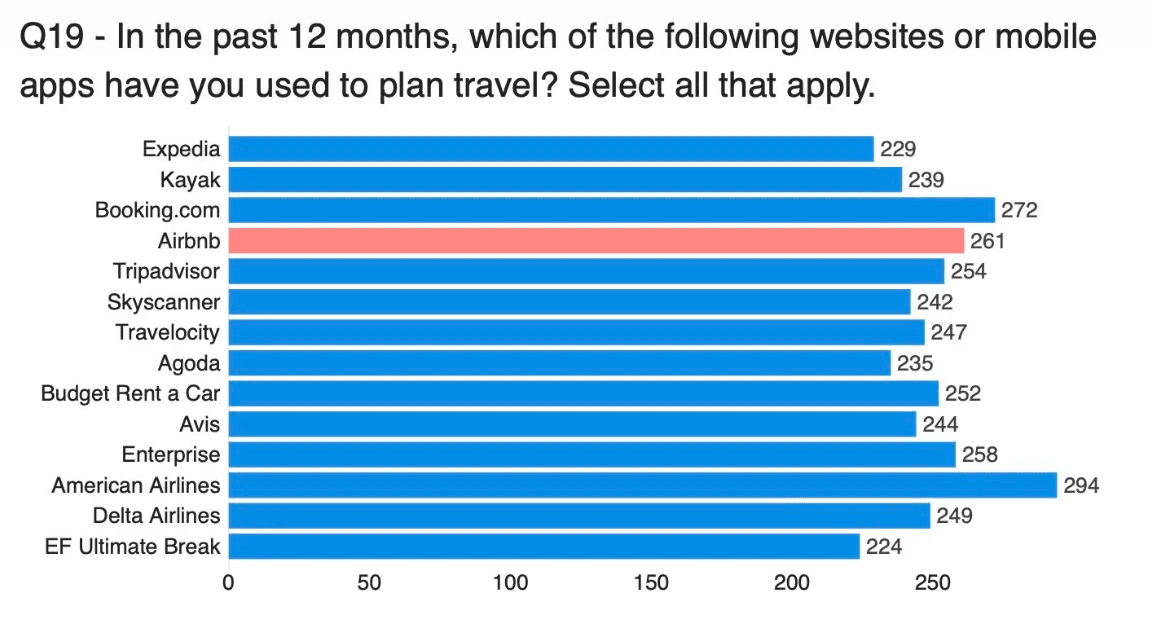
Our team used surveys to collect quantitative data, which helped validate and support our findings at scale.
While contextual inquiries and usability tests provided in-depth insights into pain points and user behaviors, the quantitative data allowed us to complement these insights with measurable evidence.
Affinity Maps
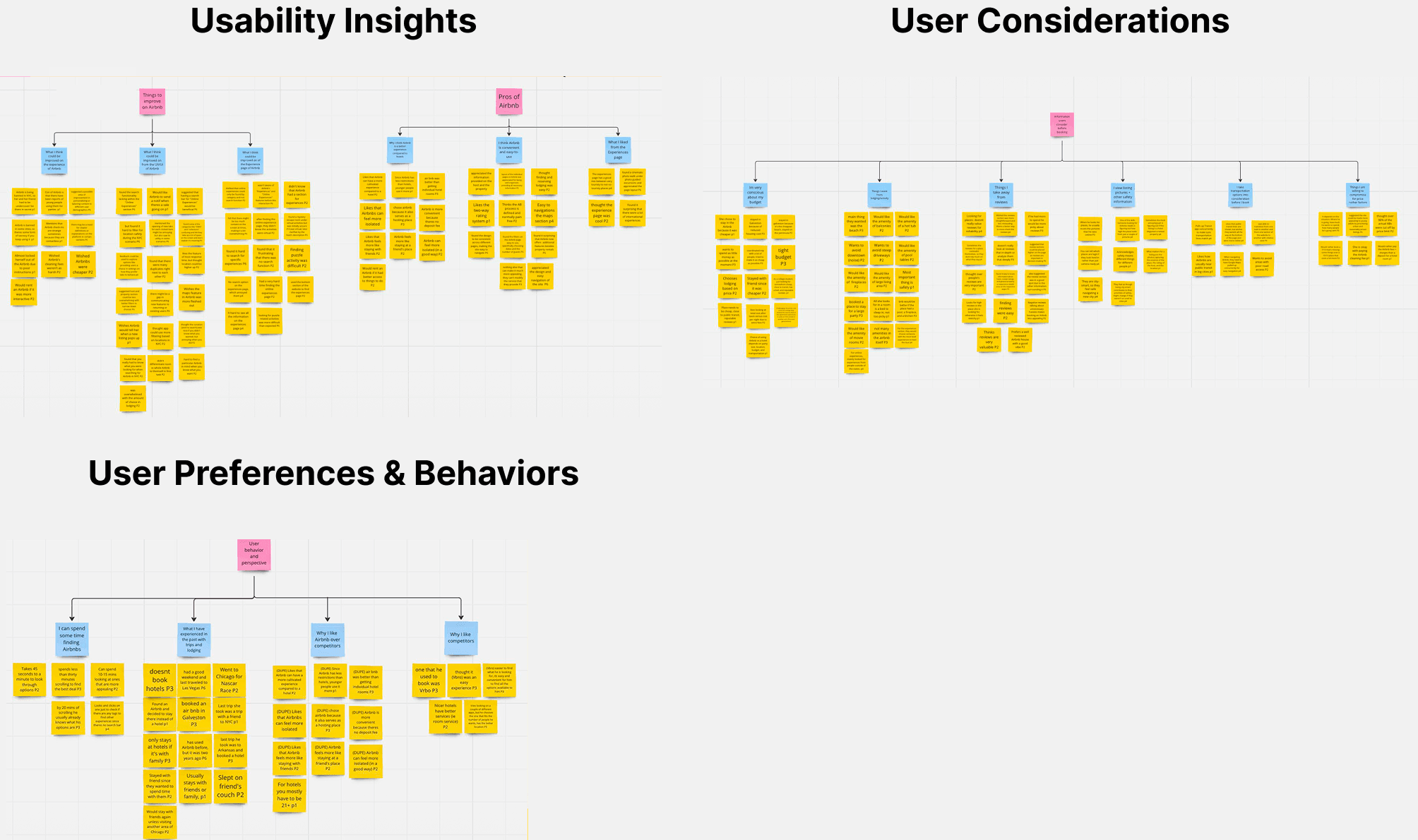
Utilizing affinity maps and data analysis, our team categorized our main findings into three major groups: user considerations, user preferences & behaviors, and usability insights.
Key Findings
User Considerations
Price and value considerations shape lodging choices
Young adults tend to stay with family or friends when traveling since it's often free
Young adults are willing to compromise for factors like price, safety, or convinence
Price of lodging was the most important factor for all participants
Usability Insights
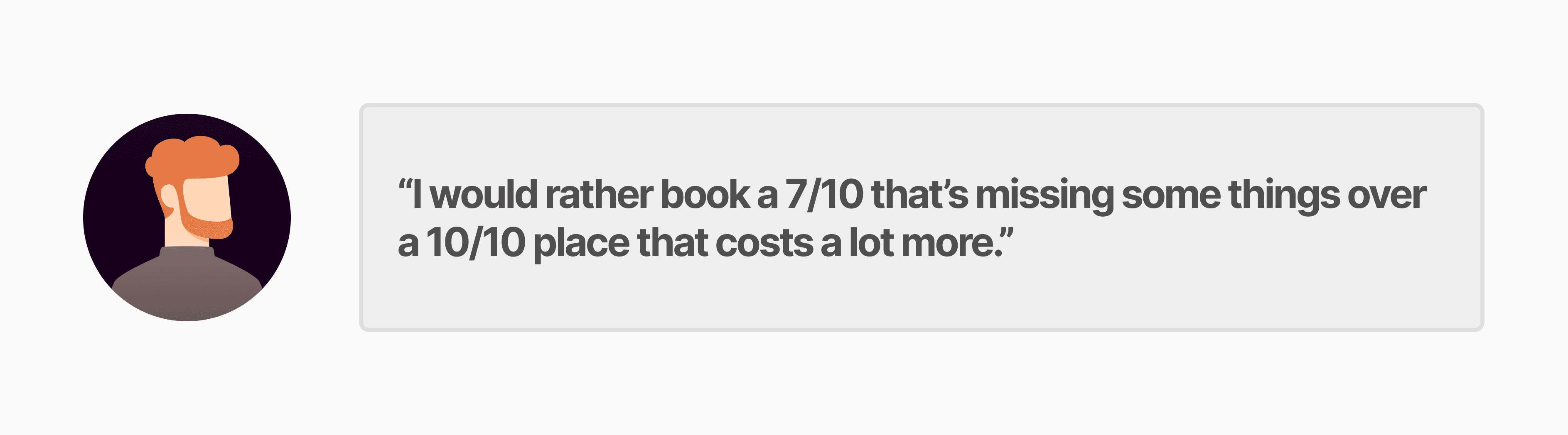
As digital natives, young adults found the user experience of Airbnb to be lacking
Many users used external tools, like Google Maps, to evaluate an accommodation due to the lack of key features like distance to public transport
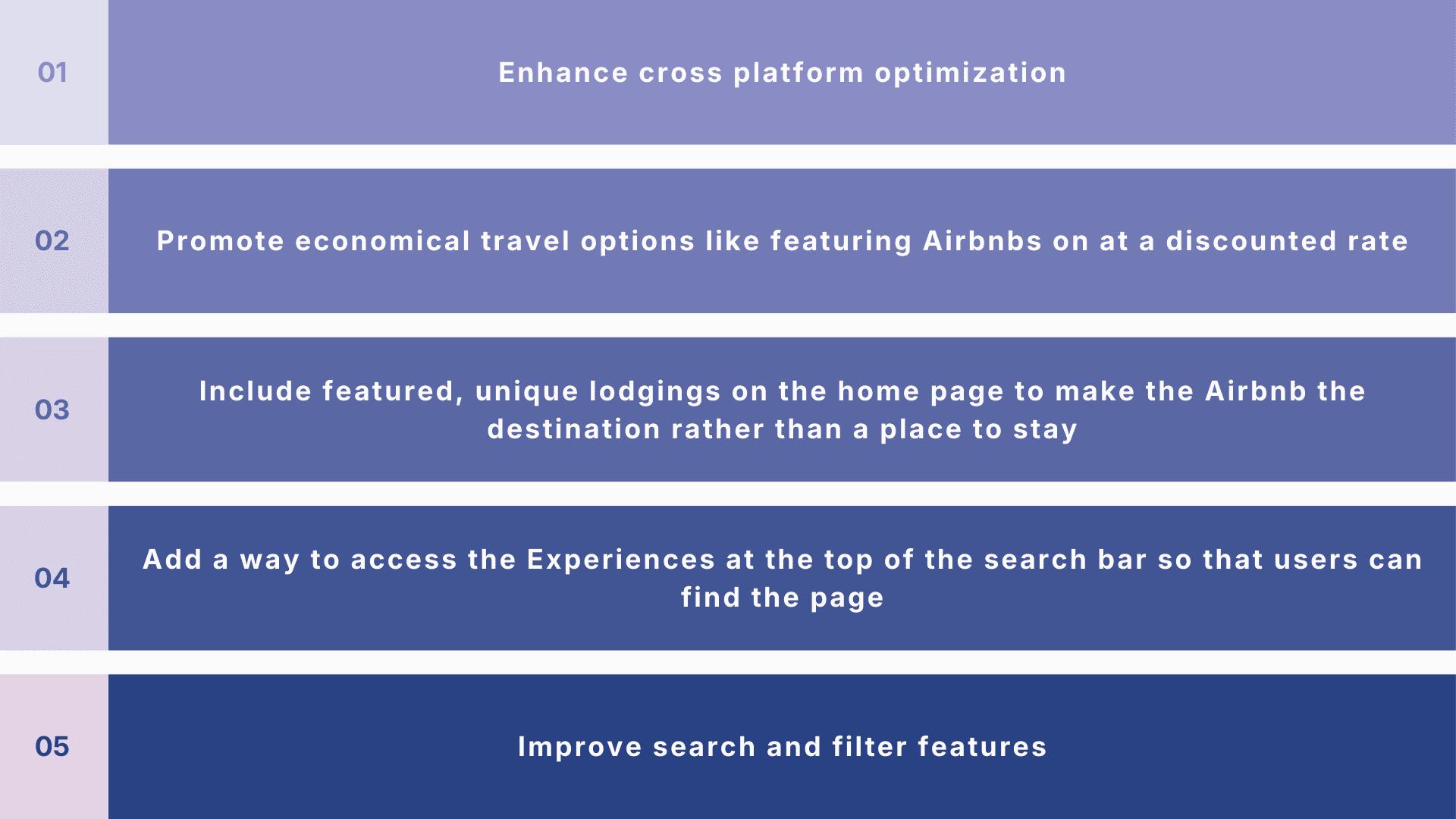
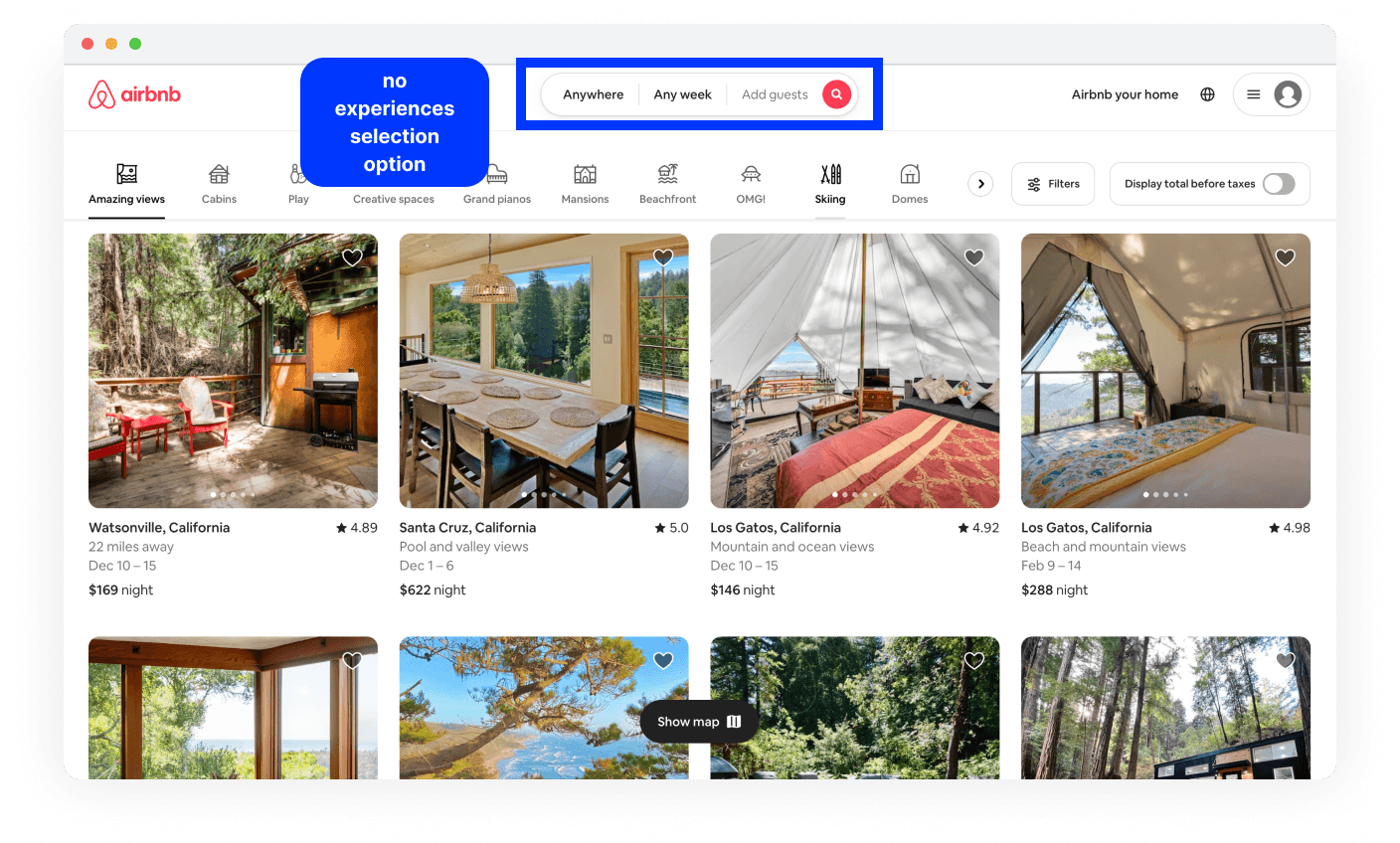
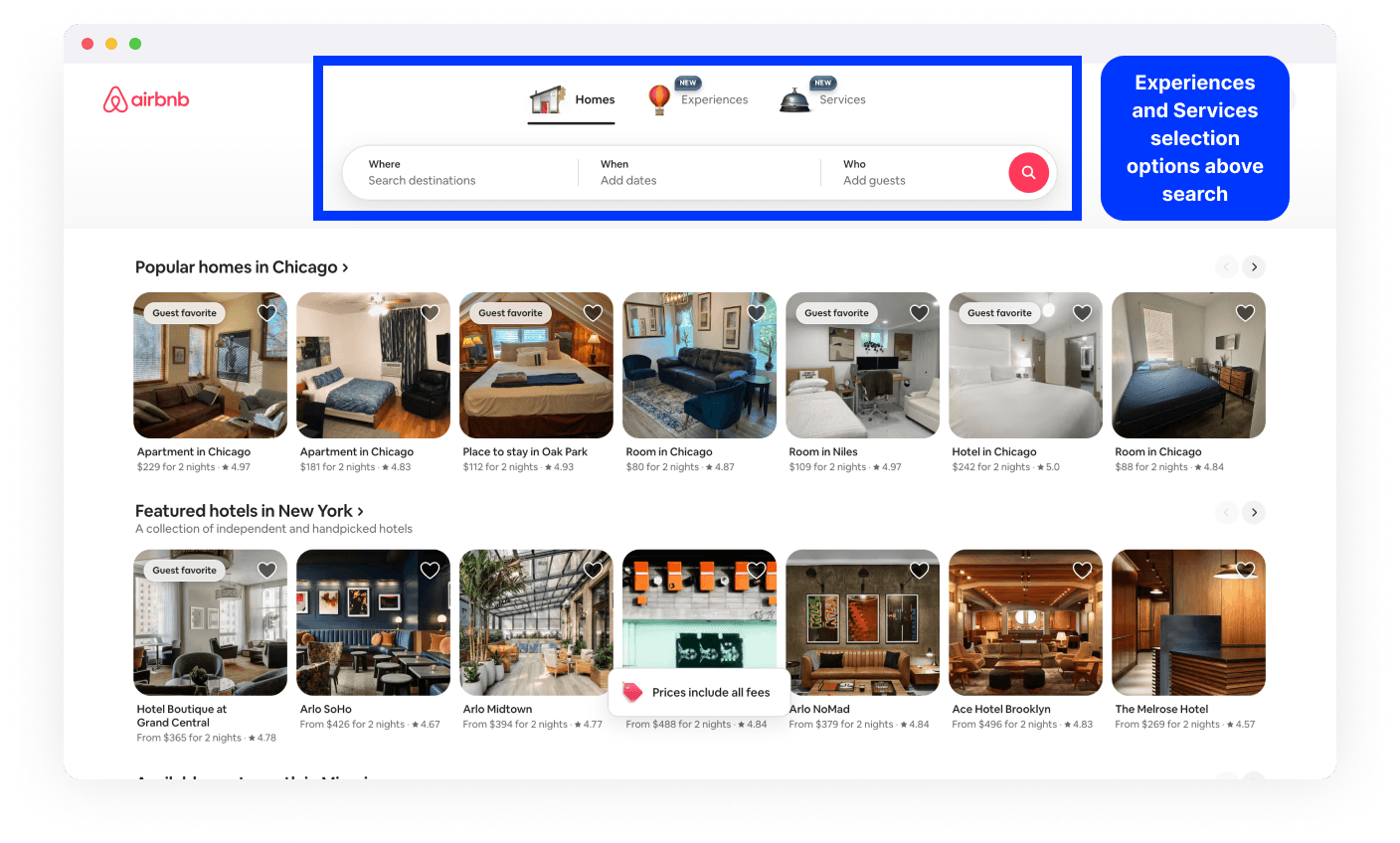
All participants were not aware of the Experiences page and needed help finding this feature and were frustrated by the lack of search functionality
User Preferences & Behaviors
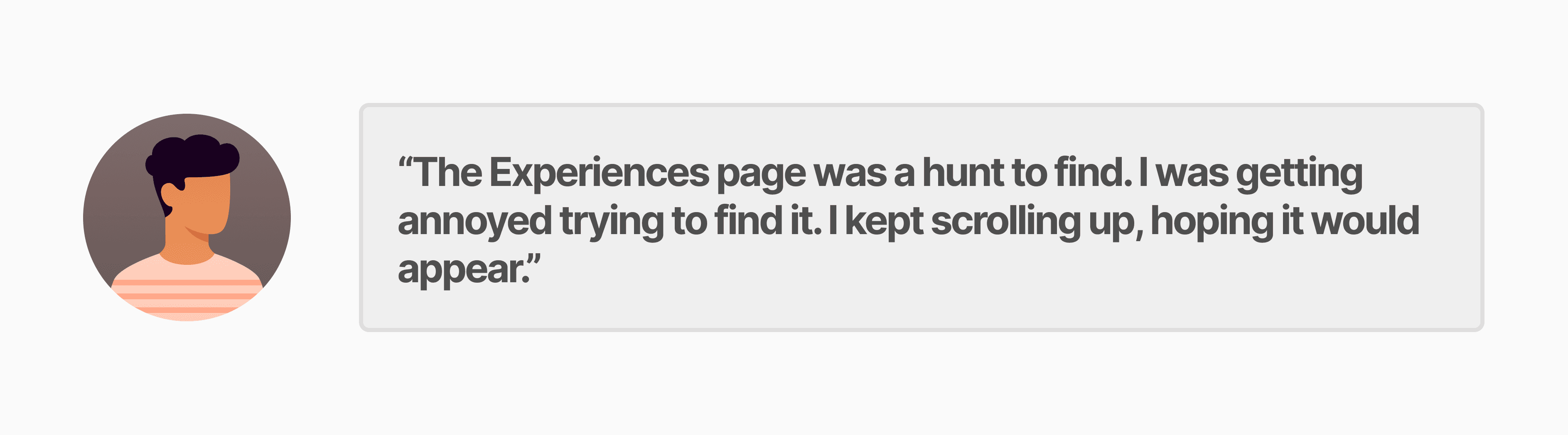
Young adults prioritize convenience and experience over brand loyalty
Young adults are brand neutral and will look to competitors for better services and convenience
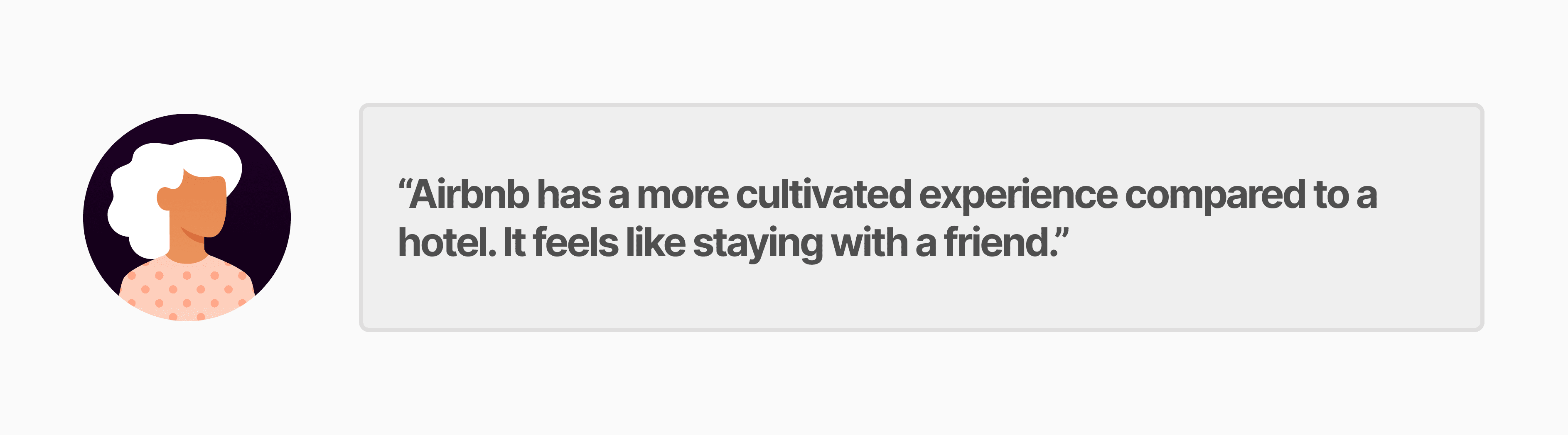
Young adults think Airbnb is a better experience compared to a hotel as there is more theme cultivation, fewer restrictions, and no deposit fee
Recommendations
Impact
Although this was a course-based project in 2023, one of our recommendations were implemented years later.
2023 User Interface
2026 User Interface
Learnings
I learned a great deal from this project. One of the biggest takeaways was the importance of following the user. During semi-structured interviews, I realized that you needed to probe deeper and pursue participants’ lines of thinking rather than sticking to a script.
I also developed a stronger grasp on maintaining timelines and team alignment. As project manager, I coordinated multiple schedules to ensure assignments were completed well ahead of deadlines, giving us time to receive weekly feedback and revisions from our professor which strengthened my leadership and organizational skills.
Finally, I realized that qualitative research methods should be intentionally sequenced so that each phase builds on the previous one. Structuring the research in this layered way helped me deepen my understanding over time and identify more meaningful patterns across our findings.